
Indoor signs

Signs Now
1/16/2026
Customers expect businesses to be easy to navigate. When they’re not, frustration grows quickly; impacting satisfaction, efficiency, and brand perception. Wayfinding signage plays a critical role in helping visitors move confidently through commercial spaces, from retail stores and offices to hospitals, campuses, and industrial facilities.
Clear, well-planned navigation doesn’t just benefit visitors. It reduces operational strain, supports staff productivity, and creates more organized, efficient environments.
Modern facilities are larger and more complex than ever before. Without clear wayfinding signage, visitors are forced to stop, search, and ask for help. That friction slows down operations and diminishes the overall experience.
Good wayfinding signage:
Reduces visitor frustration
Improves traffic flow
Decreases reliance on staff for directions
Enhances overall brand professionalism
When navigation works, everything else runs more smoothly.
Wayfinding begins before a visitor enters the building. Exterior signage establishes entry points, parking areas, and primary destinations. Interior signage continues the journey with clear directional cues and confirmation signage.
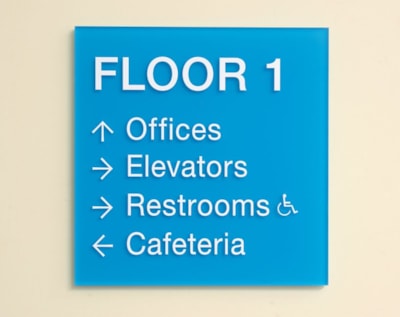
Directory signs and directional signs should follow intuitive structures: alphabetical listings, clear departmental groupings, or simple numbering systems. Visitors should never have to interpret internal operational logic.
ADA compliance signage is essential for permanent room identification and key destinations. Proper tactile lettering, braille, contrast, and mounting ensure accessibility while reducing legal risk.
Signs must be placed at decision points, not after them. Intersections, stairwells, elevator lobbies, and entry thresholds are where guidance matters most. Strategic placement minimizes backtracking and confusion.
Digital directories and kiosks allow businesses to update information in real time. This is especially valuable in environments with frequent changes, such as medical facilities, campuses, and corporate offices.
Digital wayfinding also supports multilingual content and accessibility features, improving usability for diverse audiences.
Effective wayfinding signage reduces repeated directional questions, improves traffic flow, and helps staff focus on higher-value tasks. Over time, these efficiencies contribute to lower operational costs and better resource allocation.
Inconsistent or outdated signage undermines credibility. A unified wayfinding system reinforces brand standards and creates a more polished, professional environment.
To support effective wayfinding systems, Signs Now offers a wide range of customizable solutions, including:
Directional Signs: Wall-mounted, ceiling-hung, or post-mounted signs guiding visitors through hallways and intersections
Directory Signs: Static or changeable directories for lobbies and common area
ADA-Compliant Signs: Tactile and braille room identification and regulatory signage
Interior Signs: Wayfinding panels, wall graphics, and branded navigation elements
Exterior Signs: Parking, entry, and directional signage to guide visitors before they enter
Digital Displays & Directories: Interactive or digital solutions for flexible environments
Signs Now provides custom wayfinding signage designed for clarity, durability, and compliance. From interior directional signs to ADA-compliant room identification and digital directory solutions, we help businesses create environments that work better for customers and staff alike.